


Is bread delicious? Yes.
Do I love it? Absolutely.
Is it healthy? That depends.
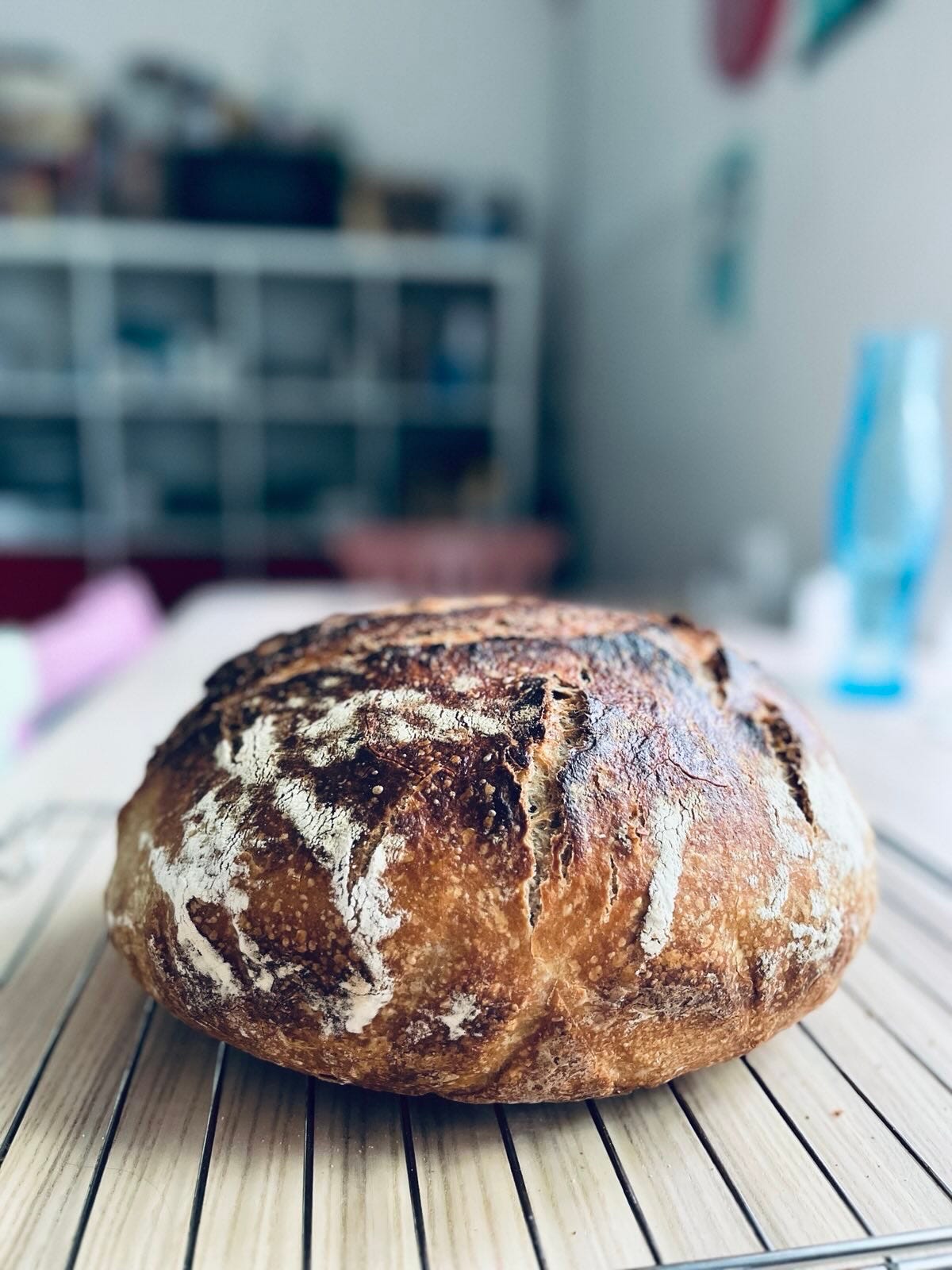
Right now, I’m visiting Germany – the land of bread. And I must admit: I love it. The smell from the bakeries. The crust of a dark rye sourdough. The warm, soft crumb melting with a bit of butter. I even baked my very first sourdough loaf a few days ago. A little misshapen, but alive, fragrant, and honestly, a small miracle.
But then the other part of me wakes up – the part that has worked with Traditional Chinese Medicine (TCM) for many years. The part that doesn’t just see food as nourishment, but as energy, impact, and balance.
So what does Chinese medicine have to say about bread?
How TCM views food
In TCM, food is more than calories or nutrients. It is considered medicine – with energetic qualities that influence the body in specific ways. Every food has:
A thermal nature (warming, cooling, neutral)
A taste (sweet, bitter, salty, pungent, sour)
A direction in the body (upward, inward, downward, outward)
And a connection to specific organ systems
TCM places special focus on the Spleen and Stomach, which together form the center of digestion. They transform food into Qi (vital energy), blood, and body fluids. A strong and stable digestive system is the root of vitality, immunity – and even emotional stability.
What happens when grain becomes bread?
Grains like rice, millet, oats, and barley are deeply valued in TCM. They nourish the Spleen, support digestion, and offer gentle, sustaining energy.
But bread is not the same as cooked grains.
Once grains are baked – especially with yeast or in rapid industrial processes – their energy becomes denser, heavier, and harder to digest. This can generate internal dampness, stagnation, and digestive strain. This is especially true for soft, fresh, processed bread – but even sourdough, if eaten too frequently.
Three reasons why bread may challenge digestion (according to TCM):
It’s hard to digest
Fresh, soft bread is dense and compact. In TCM, this is said to block Qi movement. Drier breads – like crispbread or well-toasted, older loaves – are generally easier to process.It creates dampness and phlegm
Especially white bread, yeasted and processed, can contribute to dampness over time. This might show up as bloating, fatigue, fogginess, mucus, or a heavy feeling in the body.It’s often eaten cold with cold toppings
Bread is frequently combined with cheese, butter, raw vegetables – all of which are cold and damp in nature. Especially in the morning, this can overwhelm the digestive system, which prefers warmth.
But… is bread bad?
No – not at all.
TCM is not about strict rules or banning foods. It’s about balance – and understanding what you need.
I love bread. But I’ve learned to meet it with awareness – both as a food lover and as a practitioner.
What about gluten?
Gluten is often portrayed as the enemy in modern health culture – inflammatory, problematic, something we should all avoid. But Chinese medicine takes a different view:
Gluten-containing grains can nourish the Spleen and Stomach
Wheat, rye, barley – in traditional Chinese medicine, these grains have long been used to build Qi. The issue is usually not gluten itself, but the form in which it’s eaten – overly processed, soft, cold bread.Not everyone has trouble with gluten
If you have strong digestion and a solid "Earth constitution," you may tolerate gluten perfectly well. TCM doesn’t label foods as “good” or “bad” – only appropriate or inappropriate, depending on the person.Curious to try avoiding gluten? Do it gradually
Don’t remove everything at once – you’ll never know what made the difference.
➤ First, try removing dairy for 4 weeks and see how you feel.
➤ If no change, then try removing gluten for 4 weeks.
➤ Afterwards, reintroduce it mindfully: Does it feel fine? Or does your body react?
Bread & weight gain – is there a connection?
Actually, yes. In TCM, there’s a strong link between a weakened Spleen, internal dampness, and weight gain. Bread – especially soft, cold, processed bread – can contribute to that imbalance.
When the Spleen is impaired, it struggles to transform and transport fluids. These accumulate as dampness – which can lead to bloating, sluggish digestion, puffiness, and yes, weight gain (especially around the abdomen, hips, and thighs).
Important tip:
Avoid bread in the evening if you have signs of dampness (e.g. swelling, fatigue, heaviness, coated tongue). That’s when the Spleen is naturally weakest, and bread becomes an even bigger digestive burden.
How to make bread more TCM-friendly
Choose sourdough over yeast-risen breads
Avoid eating it cold – pair it with warm soup, tea, or cooked vegetables
Don’t eat bread every day
Baking at home? Add spices like coriander, caraway, or fennel seeds – all of which support digestion and reduce the damp/heavy nature of wheat
How I do it – in real life
Here’s the reality: I have two kids – and they love bread, too. So how do we manage it as a family?
My solution: Balance.
Some mornings we eat bread. Some days they bring crispbread sandwiches to school. But other mornings, we have warm porridge with applesauce, millet, or rice porridge with plant milk.
We rotate – so bread doesn’t dominate every day.
Because if you eat bread for breakfast, sandwiches for lunch, and maybe pizza at night – suddenly a third or more of your entire diet is bread. And that’s simply too much.
So here’s my advice:
If you want to eat bread – do it consciously and with variation.
Don’t make it an everyday habit. Choose forms your body handles well. Let it be a joy, not a burden.
And at the same time:
For some people, bread – especially gluten – really doesn’t work. If you feel better without it, or if your body clearly says no: then your best bread is no bread. And that’s 100% okay. You’re not overreacting. You’re listening – and that’s wisdom.
Especially for people with gut conditions like Crohn’s disease or ulcerative colitis, it can be helpful to minimize digestive strain for a while.
And remember: TCM recognizes many different patterns behind digestive symptoms – which means many individual paths to healing. What helps one person might harm another.
In TCM, there’s no right or wrong – only what’s right for you.
Every body has its own way to return to balance.
Want to go deeper into TCM & food?
I’ll be publishing a more detailed follow-up article soon – just for subscribers – that will include a printable TCM food chart to support your everyday choices.
👉 Make sure you’re subscribed so you don’t miss it!
You’ll find all articles, free and paid, at:
🔗 www.rhythmsandroot.substack.com